 The ABEL Model
The ABEL Model
A continuous cycle for purpose-driven organizations to move from good intentions to visible, measurable impact.
A proven model for mission-driven change
It’s not about me.
The ABEL Model brings decades of real-world change leadership from SGA Praxis LLC into a practical framework for ministries, nonprofits, missions teams, and purpose-driven organizations.
It helps teams stay focused on shared mission truth, wise stewardship, people-centered execution, and measurable impact — so the right people can do the right work in the right order and make it last.
The ABEL Flywheel
Four phases that build on each other — creating sticky, self-reinforcing change.
Assess & Align
Establish shared truth
Blueprint & Build
Design the path people can follow
Execute & Enable
Deliver work and help people use it
Learn, Leverage & Lead
Measure impact and scale what works
Assess & Align
Establish shared truth
Before any work begins, we must first understand where we are and ensure everyone shares the same understanding of reality. This phase is about truth-telling and alignment.
Key Questions
- ? What is our current capacity?
- ? What constraints are we working within?
- ? Are we aligned on what success looks like?
- ? What's the honest assessment of our situation?
Expected Outcomes
- ✓ Shared understanding of reality
- ✓ Identified constraints and limitations
- ✓ Alignment on priorities and focus areas
- ✓ Honest baseline for measuring progress
Blueprint & Build
Design the path people can follow
With alignment established, we now design the roadmap. This phase creates the governance structures, measurable outcomes, and clear plans that guide the work ahead.
Key Questions
- ? What does the roadmap look like?
- ? How will we measure progress?
- ? Who owns each piece of work?
- ? What governance keeps us on track?
Expected Outcomes
- ✓ Clear objectives and evidence of progress
- ✓ Defined ownership and accountability
- ✓ Measurable milestones and checkpoints
- ✓ Decision rhythm for coordination
Execute & Enable
Deliver work and help people use it
Plans are meaningless without execution. This phase focuses on delivering real work in a weekly rhythm, removing barriers, and enabling people to adopt and use what's built.
Key Questions
- ? What gets done this week?
- ? What barriers need to be removed?
- ? How do we enable adoption?
- ? Who needs support right now?
Expected Outcomes
- ✓ Tangible work delivered consistently
- ✓ Barriers identified and removed
- ✓ People equipped to use what's built
- ✓ Sustainable weekly execution rhythm
Learn, Leverage & Lead
Measure impact and scale what works
The cycle isn't complete without learning. This phase captures outcomes, builds organizational capacity, and identifies what should be scaled or evolved for greater impact.
Key Questions
- ? Did we achieve the outcomes we intended?
- ? What did we learn from this work?
- ? What capacity did we build?
- ? What should we scale or stop?
Expected Outcomes
- ✓ Documented outcomes and learnings
- ✓ Increased organizational capacity
- ✓ Decisions on what to scale or sunset
- ✓ Insights that improve the next cycle
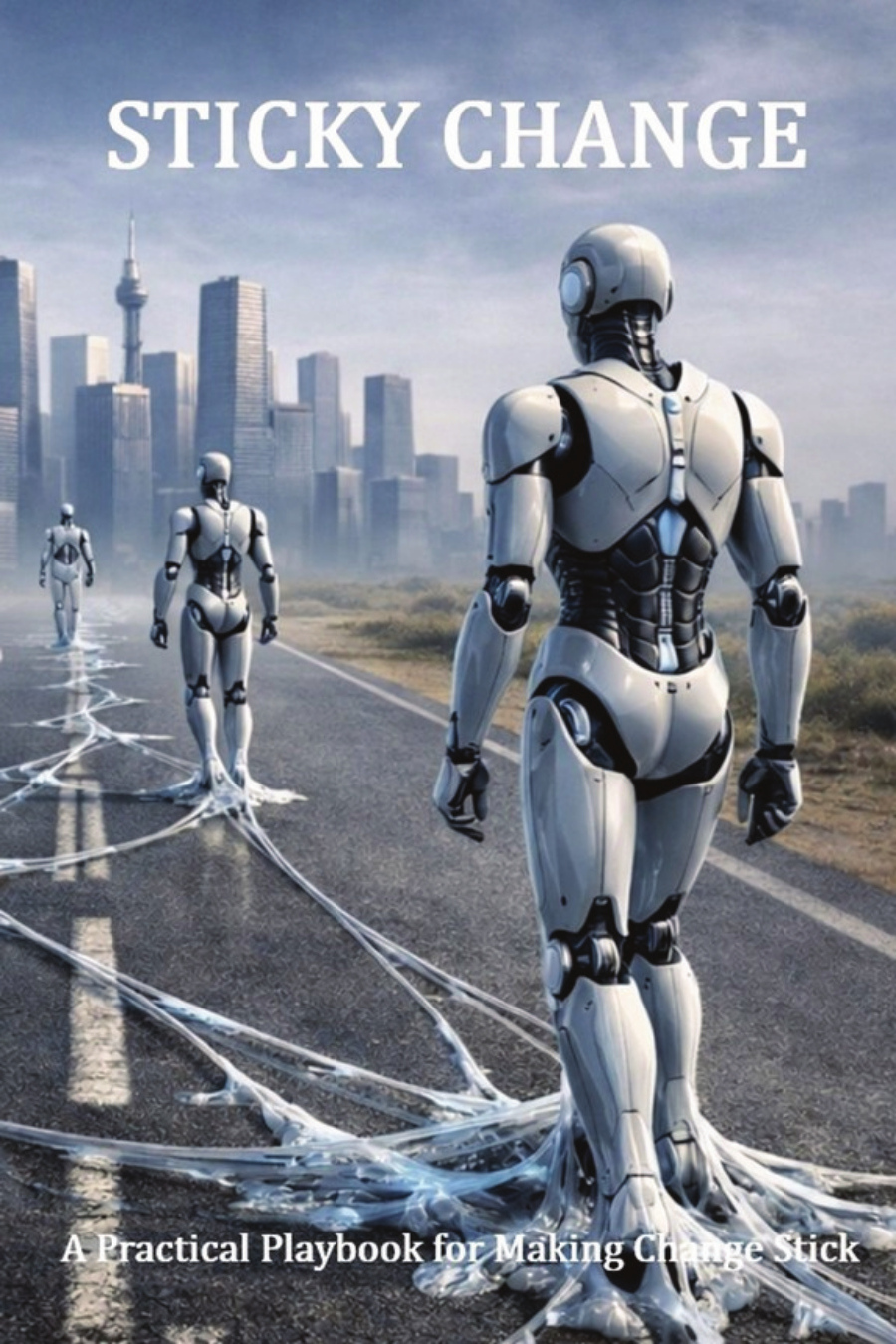
STICKY CHANGE
The ABEL Model is grounded in Sticky Change — a practical framework born from 20+ years of change management experience. Unlike typical approaches that fade when the consultant leaves, Sticky Change principles help teams internalize new ways of working so improvements become permanent.
Nonprofit leaders and executives will find the principles directly applicable to their own contexts. They help you build organizational capacity, align your team, and measure what truly matters as faithful stewards of resources.